
Studies show that malnutrition raises mortality in hemodialysis patients, and for severely malnourished patients mortality is strikingly high. Hui Der Clinic pays close attention to each patient's nutrition and provides individual nutrition education and supplementation.
Daily nutritional needs of hemodialysis patients: most important is enough energy, 35 kcal/kg per day, followed by enough protein, 1.2 g/kg per day. Fats should be mainly unsaturated; saturated fat should make up less than 7% of total daily calories, and omega-3 fatty acid intake should be increased.
Sodium intake for dialysis patients is 2 g/day. Potassium intake for chronic kidney disease patients should not exceed 2 g/day (or should be under 1 mmol/kg), although potassium may need to be supplemented when it runs low because of malnutrition, diarrhea or other causes. Daily phosphorus intake for dialysis patients is 800–1000 mg; if blood phosphorus is high, phosphate-lowering treatment is also needed.
Vitamin and mineral needs also require attention and appropriate supplementation. Water-soluble vitamins such as B1, B6, C and folic acid are lost during dialysis and should be replaced. Of the fat-soluble vitamins, only vitamin D needs supplementing when deficient. Trace elements such as copper, zinc, magnesium, aluminum, selenium and iron should be supplemented in appropriate amounts.
Hui Der Clinic follows the international ISRNM guidelines to manage protein-energy wasting (PEW).
Care is personalized to each patient's clinical situation: regular nutrition screening, then nutrition assessment, nutrition education and, when necessary, nutritional intervention.
For screening, Hui Der Clinic uses the Malnutrition Screening Tool (MST), which looks at (1) unintentional weight loss and (2) loss of appetite. A combined score above 2 indicates risk of undernutrition and PEW, and Hui Der Clinic then always carries out a further nutrition assessment.
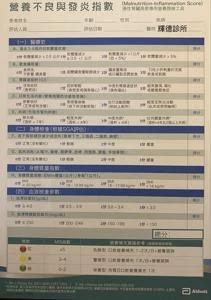
The assessment tools used are the Subjective Global Assessment (SGA) and the Malnutrition Inflammation Score (MIS) (illustration provided by Abbott Laboratories), cross-referenced with the ISRNM criteria to diagnose PEW.
If malnutrition is found, Hui Der Clinic provides nutrition counseling tailored to the patient and, when needed, oral nutrition supplements (ONS), enteral nutrition (EN) by tube feeding, or in more severe cases parenteral nutrition (PN) with or without EN.
The prevalence of PEW and malnutrition among chronic kidney disease patients is very high. Hui Der Clinic intervenes early and actively so patients stay well nourished, which brings better energy and quality of life and lowers hospitalization and mortality. Good nutrition helps patients live fuller, brighter lives. (This article focuses on nutrition for dialysis patients; patients not on dialysis are also welcome to consult Hui Der Clinic about nutrition.)