
When the kidneys fail, phosphorus builds up in the body and production of active vitamin D3 falls. Both cause parathyroid hormone (PTH) to rise.
Excess PTH causes osteoporosis, osteitis fibrosa, bone pain, muscle disease, ligament rupture, weakness, arthritis, pseudogout and bone deformity, and raises the risk of fractures. It also causes itchy skin, soft-tissue calcification and vascular calcification, which hardens the coronary arteries and increases mortality. Controlling PTH is therefore very important for dialysis patients.
Treatment follows these main directions:
Diet control, especially limiting phosphorus intake to 800–1000 mg per day.
Keeping blood calcium and phosphorus in balance, with adequate dialysis. If phosphorus stays high despite good diet control and dialysis, phosphate binders are given to treat hyperphosphatemia, chosen to suit the patient; when needed, calcium- and aluminum-free binders such as Fosrenol (lanthanum carbonate), Renvela (sevelamer) or ferric citrate are used. Depending on the patient, active vitamin D3 or calcimimetics may also be given, including oral drugs such as Regpara (cinacalcet) and Orkedia (evocalcet), or the injectable Parsabiv (etelcalcetide).
If PTH still cannot be controlled with appropriate diet, medication and injections, parathyroidectomy may be considered, either by local injection or surgery.
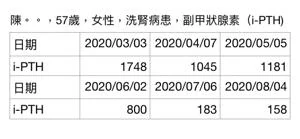
Hui Der Clinic provides comprehensive PTH treatment. The chart shows a female patient, Ms. Chen, whose PTH came well under control with the clinic's dietary education and medication, without surgery.